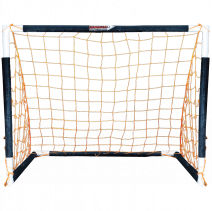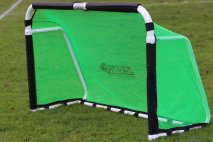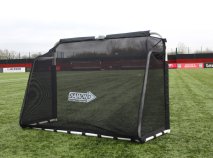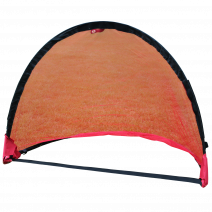


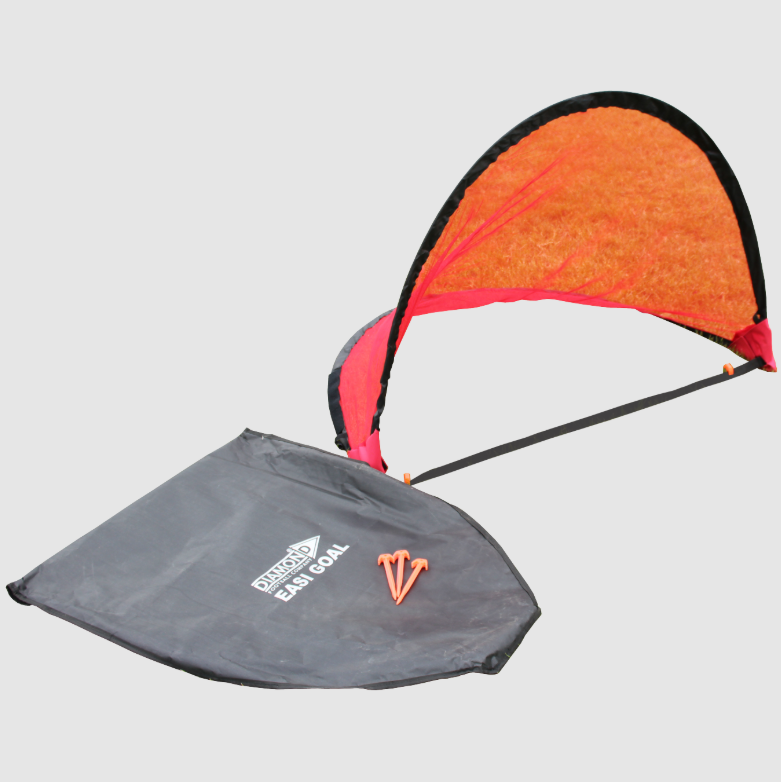
Choosing the right mini football goal can make a significant difference to both enjoyment and player development. Whether you're buying for young children, setting up a garden football area, or a football coach or manager organising small-sided training sessions, selecting the correct goal size and frame type is essential.
This guide explains everything you need to know to help you find the best option for your needs and budget.
Why mini football goals are so popular
Mini football goals continue to grow in popularity because they offer a convenient and effective way to play and practice football in a range of environments. The key benefits include:
- Ideal for home football practice.
- Support player development by encouraging regular shooting, passing, ball control, and technical training.
- Suitable for a variety of settings, including gardens, schools, sports centres, clubs, and training grounds.
- Helps improve shooting accuracy and technique by providing realistic targets during practice sessions.
- Used extensively in grassroots football and small-sided games, making them a versatile option for players of all ages.
- Available in a range of sizes and designs.
- Easy to assemble and transport.
- Perfect for training sessions at a club or for recreational play.
Choosing the right goal size
When buying mini goals, one of the most important factors to consider is their size. The perfect goal size depends on the players' age, the available space, and whether the goal will be used for a casual kickabout, a structured training session, or competitive matches.
Recommended mini football goal sizes by age group
| Age Group | Recommended Goal Size | Primary Use |
|---|---|---|
| Under 5s | 3ft x 2ft | Garden play, shooting practice, introducing young children to football |
| Under 7s | 4ft x 3ft | Home training, small-sided games, basic skill development |
| Under 9s | 6ft x 4ft | Garden football, grassroots training sessions, recreational matches |
| Under 11s | 8ft x 4ft | Small-sided games, club training, developing match scenarios |
| Under 12s and above | 12ft x 6ft | FA Mini Soccer formats, grassroots matches, structured coaching sessions |
Training goals vs match goals
When comparing football goals, it's important to understand the difference between training goals and match goals.
| Goal Type | Best For | Benefits |
|---|---|---|
| Training Goals | Shooting drills, garden football | Lightweight, portable, quick to set up |
| Match Goals | Small-sided games and organised fixtures | More realistic dimensions, enhanced stability |
| Portable Goals | Players who train in different locations | Foldable design, often supplied with a carry bag |
| Permanent Goals | Regular garden or club use | Superior durability and stability |
Quick tips for choosing the right goal size
- Choose a goal that matches the player's age and ability level.
- Consider the available playing space before purchasing.
- If you are looking for garden football goals, a 6ft x 4ft or 8ft x 4ft goal is often the most practical option.
- Coaches running structured sessions may benefit from larger 12ft x 6ft football goals.
- If transportation is important, look for goals designed with foldable frames and carry bags.
What are the different types of mini football goals?
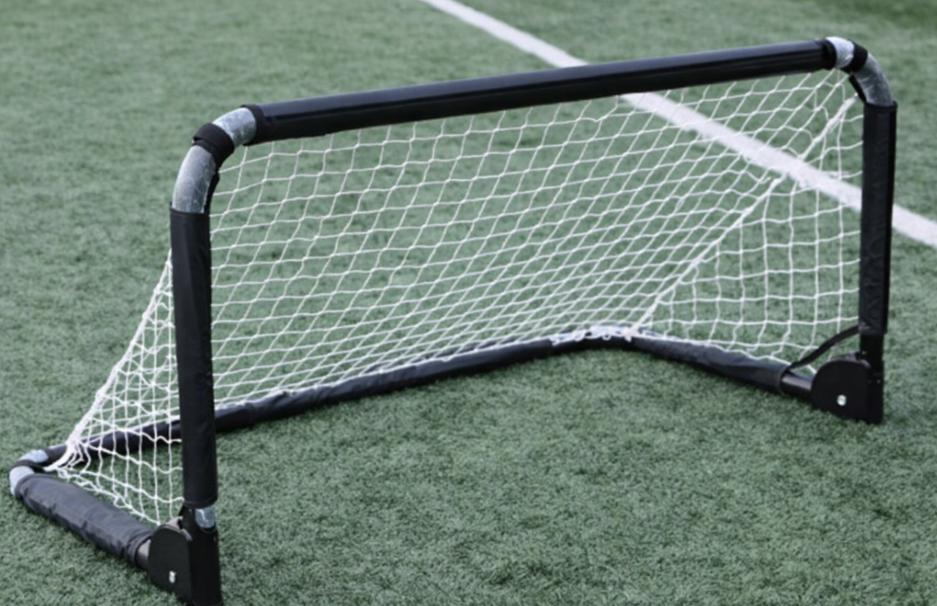
Mini football goals come in a range of sizes to suit different spaces and training needs. At Diamond Football, the mini and small-sided options span lightweight coaching goals through to portable folding aluminium frames, so there's a goal to match where and how you play, whether that's the garden, an indoor hall, or an outdoor training pitch.
Mini football goals for the garden
Buying a mini goal for the garden is a popular option, as it's often the most practical place for many families to play football. Mini football goals take up less space in a garden and easily fit into most gardens, plus they are suitable for children and adults alike.
What to consider before buying
- Measure your available space before choosing a goal.
- Consider how much room players need behind and around the goal.
- Think about nearby obstacles such as fences, sheds, greenhouses and plant pots.
- Decide whether the goal will stay in place or be moved regularly.
- Check whether the goal includes goal pegs for stability.
Recommended goals for gardens
- 4ft x 2ft Metal Coaching Goal
- Coaching Goals (5x4 or 8x4)
- Club Aluminium Folding Goal (1.5m x 1m)
- Club Folding Aluminium Goal (6ft x 4ft)
Mini indoor football goals
A mini indoor football goal needs different features to an outdoor one. Indoor environments tend to prioritise portability, floor protection and safety over permanent installation, which is where Diamond Football's lightweight folding goals come into their own.
What to consider before buying
- Make sure goals are lightweight and easy to move.
- The goals have soft or padded frame supports where possible.
- Non-slip feet or floor-friendly bases.
- Simple folding mechanism.
- Compact storage design.
Recommended goals for indoors
- Easi Goals
- Coaching Goal (4x2)
- Metal Coaching Goal (4ft x 2ft)
- Club Aluminium Folding Goal (1.5m x 1m and available with a red, orange, blue, purple or green net)
Mini Football Goals for Outdoor Training
For coaches and clubs working on pitches or training grounds, mini goals are ideal for drills, shooting practice and small-sided games. The Diamond Football outdoor training range runs from simple coaching goals to folding aluminium and mini match goals that are weather-resistant and suitable for outdoor use.
What to consider before buying
- A robust, weather-resistant frame such as aluminium.
- Portability so goals can be easily moved around the pitch.
- A folding design for easy transport and storage.
- Ready-attached, hard-wearing netting to speed up set-up.
- Net pegs or anchors to keep goals stable during play.
Recommended goals for outdoor training
- Metal Coaching Goal (4ft x 2ft)
- Coaching Goals (4x3, 5x4 or 8x4)
- Club Folding Aluminium Goal 6ft x 4ft
- Mini Match Goal (12 x 6 for 7-a-side games)
Common mistakes to avoid before buying a mini football goal
Before you buy a mini football goal, there are common mistakes that clubs, coaches, managers and players make. We list the mistakes to avoid.
- Choosing the wrong size goal: A goal that is too large or too small can reduce the effectiveness of training and gameplay.
- Overlooking portability: It is important to consider storage space, transport requirements, and ease of assembly when purchasing a mini goal.
- Ignoring weather resistance: Outdoor mini goals need to be made with materials that are designed to withstand all types of weather conditions, including rain, UV exposure, and frost, to name just a few.
- Focusing only on price: The cheapest option isn’t always the best option. Cheaper goals may require replacement much sooner than a higher-quality model.
- Forgetting about available space: You should always measure the width and depth of the goal to ensure that it caters for your needs and fits into the area you plan to put the goal.
Comparing Goal Materials
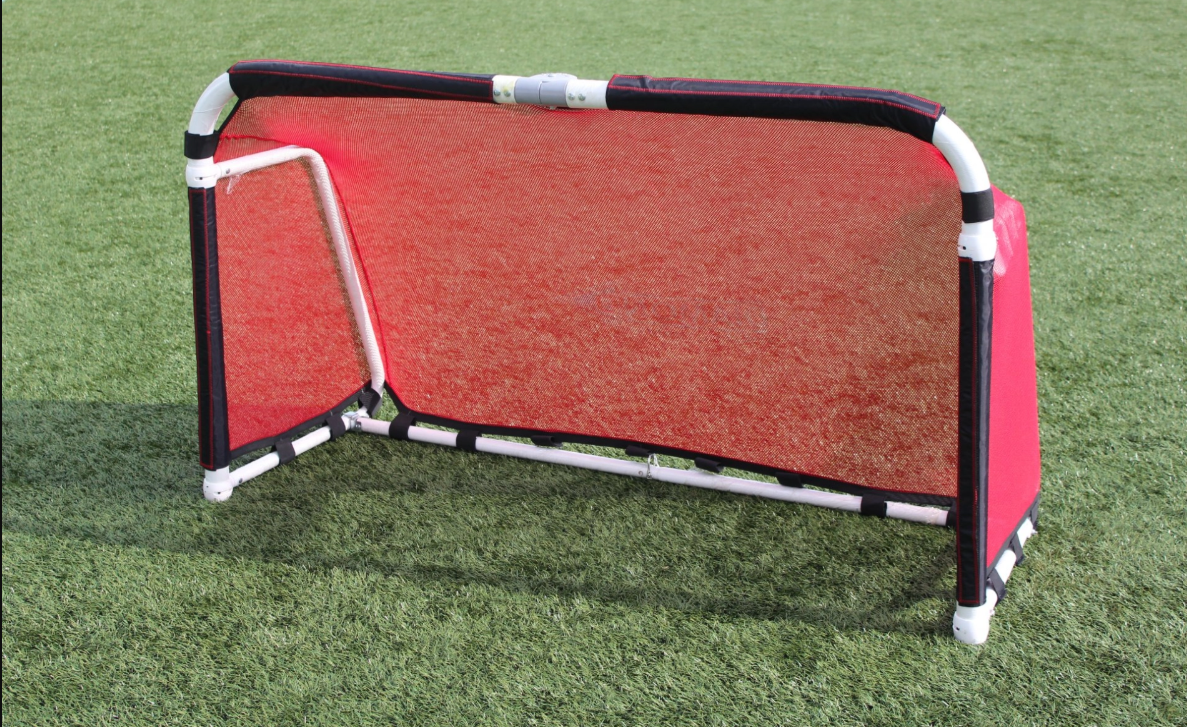
Recommended Image Alt-text: An Aluminium folding goal
The frame material has a major impact on durability, portability, maintenance requirements, and overall value for money. Here, we look at the different materials used for mini goals.
uPVC Goals
uPVC goals are among the most popular choices for coaches and players. Their appeal comes down to a handful of practical advantages: they're lightweight and easy to move, feature rust-free construction, offer straightforward assembly and low maintenance, and suit younger players well.
Best For
- Garden football
- Training sessions
- Youth football
Steel Football Goals
Steel football goals offer greater strength and stability than lightweight alternatives. Their key advantages are excellent durability and strong frame construction, with better resistance to regular impacts and greater stability during play—making them well suited to frequent use.
Best For
Clubs and schools
Training sessions
Garden football
Aluminium Football Goals
Aluminium football goals are widely used across coaching, grassroots football and professional training environments. They offer a professional-quality appearance while being lightweight yet extremely strong, making them easy to transport. Their corrosion-resistant frames also ensure a long service life, even with regular outdoor use.
Best For
- Outdoor use
- Training sessions
- High-frequency use
Portable vs permanent mini football goals
One of the biggest buying decisions is whether you need a portable goal or a more permanent installation, and here we compare the different types of goals.
Portable Goals
Portable goals are designed for flexibility and convenience, making them ideal for players, families, and coaches who need a goal they can move between locations. Many models feature quick assembly, foldable frames, or pop-up designs, while some come with a carry bag for easy transport and storage when not in use.
Portable goals are best for:
- Families
- Coaches travelling between locations
- Players with limited storage space
Permanent Goals
Permanent football goals prioritise durability and stability, making them a popular choice for regular garden installations, clubs, and schools. With a stronger overall structure and less movement during play, they provide a more realistic playing experience while remaining suitable for year-round use. For buyers looking for a long-term investment, permanent goals offer excellent reliability and can withstand repeated training sessions and match play.
Permanent goals are best for:
- Dedicated garden pitches
- Clubs
- Schools
- Community sports facilities
Where to Buy Quality Mini Football Goals
When investing in football goals, prioritise quality, durability, and long-term value over price alone. A well-made goal is more likely to withstand regular use, provide a safer playing experience, and deliver better value in the long run.
For players, parents, and coaches looking for durable miniature football goals, Diamond Football offers a range of goal options suitable for training, garden use, and grassroots football activities.
Hopefully this mini football goal buyers' guide has given you some indication of what to choose. For more articles and football-related guides, make sure you explore the Diamond Football blog.
Frequently Asked Questions about mini football goals
What size mini football goal is best for children?
The best goal size depends on the child's age and available playing space. Smaller 3ft x 2ft or 4ft x 3ft goals suit younger children, while 6ft x 4ft and 8ft x 4ft goals are often better for older children and for regular training.
What is the most durable material for mini football goals?
Steel and aluminium are generally the most durable materials for mini football goals. uPVC goals are lightweight and low-maintenance, while steel offers maximum stability, and aluminium provides an excellent balance of strength and portability.
Can mini football goals be used indoors?
Many mini football goals can be used indoors. Lightweight, foldable designs with non-slip feet are ideal for homes, school halls, and sports centres where ground anchors cannot be used.
Are portable football goals strong enough for regular training?
Many portable football goals are suitable for regular training, provided they are made from durable materials and properly secured. Models with reinforced frames, quality netting, and anchoring systems typically offer the best performance.